Cotton vs Bamboo-Derived Rayon Blankets
Compare exact fiber percentages, finished dimensions and care to decide which blanket suits your priorities.
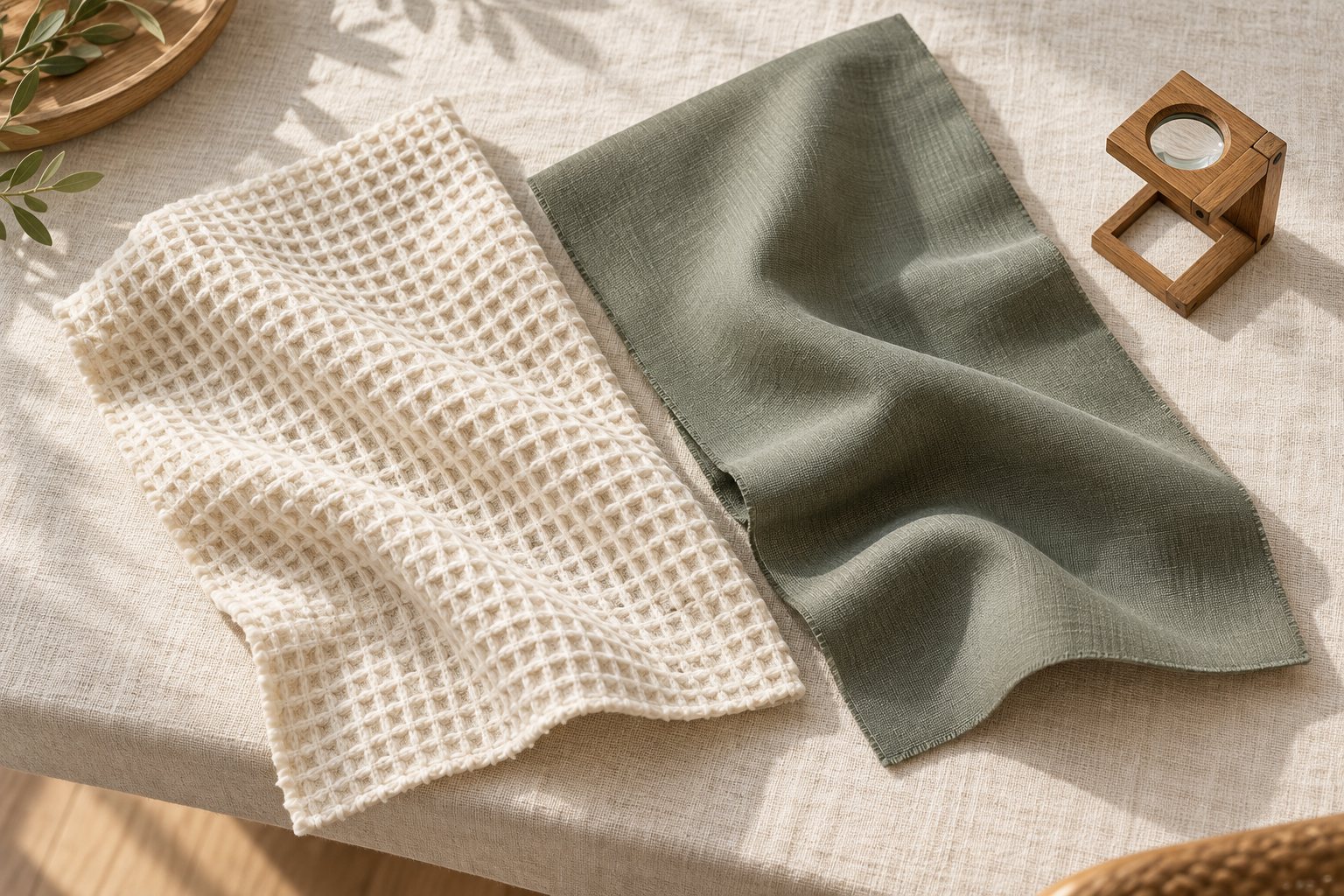
We may earn a commission from qualifying purchases through affiliate links. Our disclosure · How we evaluate
What bamboo means on a textile label
The FTC distinguishes fiber made directly from bamboo from rayon manufactured using bamboo as a cellulose source. Its guidance says rayon should be identified as rayon, or rayon made from bamboo when that origin is substantiated. Here, bamboo-derived rayon means the latter. We do not treat it as unprocessed bamboo fiber or assume the plant’s properties carry through to the textile.
When a blend changes the comparison
If your requirement is specifically 100% cotton, a cotton/rayon blend does not meet it even when cotton is named first. If you are open to either, compare construction and care before deciding by fiber name. Make two columns: requirements you will not compromise on and preferences you can adjust. Eliminate an option only for a relevant mismatch, rather than assuming one fiber is always the better purchase.
Use the same comparison worksheet
Fiber percentages identify composition, not the entire comfort profile. Keep construction, coverage and care alongside the fiber label so you are comparing the blanket you will receive.
| Field | Cotton option | Rayon option |
|---|---|---|
| Composition | Exact cotton percentage and blend fibers | Exact rayon percentage and blend fibers |
| Surface | Weave or knit and visible texture | Weave or knit and visible texture |
| Coverage | Exact width and length | Exact width and length |
| Care | Actual item instructions | Actual item instructions |
| Comfort evidence | Documented model-specific evidence | Documented model-specific evidence |
Ask what a cooling claim demonstrates
Our editorial approach is to look for the test, comparison fabric and conditions behind a claim. Does it describe an initial touch sensation or comfort over a night? Without that information, treat cooling as a claim rather than a measured benefit. We have not tested either category’s thermal performance for this guide.
Do not infer environmental benefits from a name
The FTC cautions against unsupported environmental and antimicrobial claims for bamboo textiles. Ask for evidence tied to the finished product and the specific claim. A precise fiber label is useful, but it is not a complete environmental assessment.
Build a shortlist around your priorities
If explicit cotton composition is your priority, start with a model that documents it. Keep a rayon option in consideration when its label and care requirements are clear. Apply the same coverage, surface and ownership questions to both. Neither fiber name establishes a universal winner.